
A 101 On The Essential Components In Your Car's Engine Bay
Aug 28,2024 | CosmoCarCo
Introduction: Why Know Your Car's Engine Bay?
Even if professional workshops are just around the corner, understanding what lies under your car’s hood can save you from a lot of trouble.
Whether it's a minor hiccup or a major breakdown, a basic grasp of your car’s internal workings ensures you're prepared.
For those who may not even know how to pop the hood, let’s dive into the essential components that make your car tick.
Essential Engine Components You Should Know
Engine Basics: Oil Cap and Dipstick
The heart of your vehicle is the engine, a complex machine, but let's keep things simple.
Key components like the engine oil cap and dipstick are easily accessible and crucial for routine checks.
The oil cap is where you add oil, and the dipstick lets you check oil levels to ensure your engine runs smoothly without risking damage.
Alternator: Your Car’s Power Supplier
The alternator is pivotal as it charges the car’s battery and powers the electrical system.
If your alternator fails, your car’s electrical system will shut down, potentially leaving you stranded.
Power Steering and AC Compressor
The power steering pump enhances steering response and feel, making your driving experience smooth.
If this fails, steering becomes notably harder, especially at lower speeds.
Meanwhile, the air-conditioning compressor is vital for comfort, especially in hot climates, ensuring your ride remains cool and bearable.
Drive and Timing Belts: Lifelines of Your Car
Drive belts, commonly referred to as fan belts, are crucial as they drive essential components such as the alternator, the air-con compressor, and the power steering pump.
A snapped timing belt can lead to severe engine damage, translating to substantial repair costs.
Regularly inspect these belts for any signs of wear like cracks or fraying.
Keeping Cool: Radiator and Cooling System
The cooling system, spearheaded by the radiator, is critical for maintaining optimal engine temperatures.
The radiator manages the engine’s heat by cycling coolant through its system, ensuring your engine does not overheat and suffer damage.
Always be cautious and never open the radiator cap while the engine is hot to avoid accidents.
Fluid Reservoirs: Ensuring Smooth Operation
Hydraulic Systems: Power Steering and Brakes
Your car’s hydraulic systems, like the power steering and brakes, depend on specific fluids to operate effectively.
Low levels of power steering fluid or brake fluid can lead to system failures, compromising your car’s performance and your safety.
Regular checks can prevent these issues and ensure a smoother drive.
Battery and Windscreen Washer Fluid
Lastly, the battery is essential for starting your car and powering systems when the engine is off.
Keep tabs on its lifespan and condition to avoid start-up issues.
The windscreen washer fluid reservoir is another component that’s easy to overlook but essential for maintaining visibility during your drive.
Conclusion: Empowering Your Road Experience
Understanding these fundamental aspects of your car’s engine bay not only helps in emergencies but also enhances your confidence as a driver.
Regular maintenance checks and an informed approach to your vehicle’s mechanics can greatly improve your driving experience and vehicle longevity.
Dive into your car’s manual or seek a professional for a deeper understanding, and take control of your road safety and comfort.
Embrace the journey of car ownership with confidence by knowing more than just how to drive.
Equip yourself with the knowledge to handle the basics of your vehicle’s engine bay and ensure a smoother, safer drive.
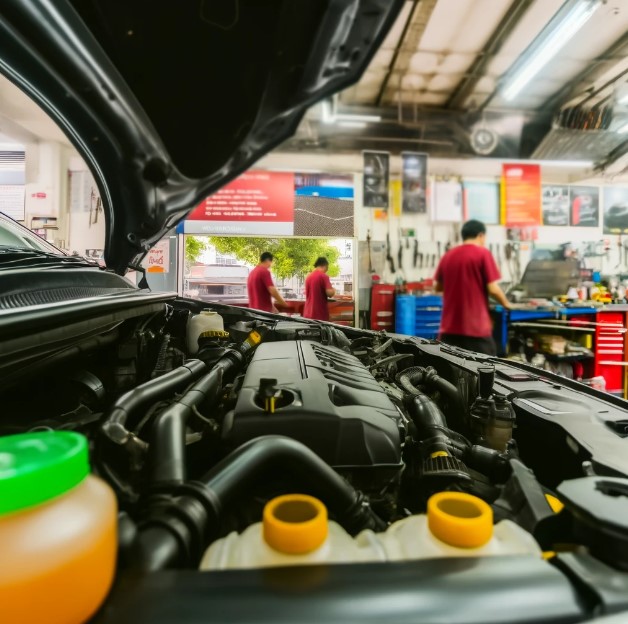
Writer's note: Images are purely fictional; for illustration only.
Comment